There’s a special kind of challenge that comes with packing books—those beloved companions that have accompanied countless adventures, late-night reflections, and quiet moments of escape. Whether you’re moving to a new home, sending a care package, or simply organizing your shelves, packing books efficiently requires more than just stacking them in a box. It’s about preserving their stories while maximizing space and minimizing wear. In this article, we’ll explore practical and thoughtful tips to help you pack your books with care and cleverness, turning what could be a daunting task into a satisfying and organized experience.
Table of Contents
- Choosing the Right Boxes and Containers for Books
- Protecting Your Books from Damage During Transit
- Organizing Books by Size and Weight for Stability
- Utilizing Space Efficiently with Strategic Packing Techniques
- Labeling and Inventorying Your Book Boxes
- Tips for Unpacking and Maintaining Book Condition After Moving
- Q&A
- Concluding Remarks
Choosing the Right Boxes and Containers for Books
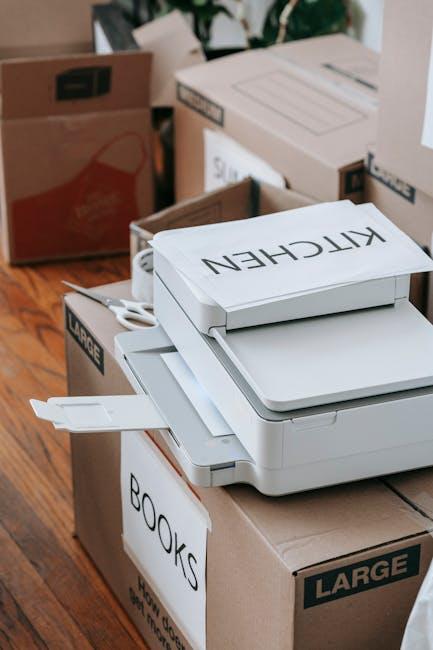
When packing books, selecting the ideal containers can make all the difference in preserving their condition. Opt for sturdy, medium-sized cardboard boxes that can hold a reasonable weight without breaking. Oversized boxes often encourage overpacking, leading to damage at the bottom, while extremely small boxes might force you to use many containers unnecessarily. Consider boxes that offer a balance between capacity and manageability, ensuring each box isn’t too heavy to lift. Additionally, waterproof or reinforced boxes provide extra protection against moisture and rough handling.
Beyond the standard boxes, you might explore specialized containers such as plastic tubs or bins with lids for long-term storage. These containers are excellent for guarding against humidity and pests. When choosing your containers, think about accessibility and labeling. Clear plastic bins can help you visually scan and locate specific books without unpacking everything. Here’s a quick comparison to assist your decision:
| Container Type | Weight Capacity | Protection Level | Cost |
|---|---|---|---|
| Medium Cardboard Box | 20-25 lbs | Moderate | Low |
| Plastic Storage Bin | 30-40 lbs | High (moisture & pests) | Medium |
| Small Book Box | 10-15 lbs | Moderate | Low |

Protecting Your Books from Damage During Transit
To safeguard your books from wear and tear during transit, start by choosing the right packing materials. Sturdy boxes with reinforced edges provide excellent protection against external pressure, while bubble wrap or packing paper offers cushioning to absorb shocks. When placing books inside, pack them upright and snugly to prevent movement. Fill any gaps with crumpled paper or foam peanuts to keep the contents stable. Additionally, wrapping each book individually with acid-free paper can help protect delicate covers and pages from scuffing or moisture.
Organizing your packed books with care can make a big difference in preserving their condition. Consider grouping books by size and weight to maintain balance during transportation, avoiding heavy volumes on top of lighter, more fragile ones. Use bold markers to label boxes containing valuable or delicate items and add a “Fragile” sticker for extra caution. The following table offers a quick overview of packing essentials and their benefits for quick reference:
| Material | Purpose | Pro Tip |
|---|---|---|
| Sturdy Boxes | External protection | Choose double-walled for extra strength |
| Bubble Wrap | Shock absorption | Wrap corners for maximum buffer |
| Packing Paper | Void filler | Use acid-free to prevent discoloration |
| Labels & Stickers | Handling instructions | Clearly mark fragile boxes |
Organizing Books by Size and Weight for Stability
When packing books, balancing the load inside your box is crucial to prevent any tipping or collapsing. Start by placing the heaviest and largest books at the bottom. This core layer acts as a stable foundation, supporting the lighter and smaller titles stacked above. This technique not only maximizes space but also protects more delicate books from getting crushed.
Consider grouping your books into categories based on their dimensions and weight. Here’s a quick guide to help you organize efficiently:
- Heavy, Oversized Books: Place flat on the bottom
- Medium-Sized Hardcovers: Stack vertically against one side
- Light Paperback Books: Fill gaps or lay on top
| Book Type | Recommended Position | Reason |
|---|---|---|
| Large Art Books | Flat bottom layer | Ensures stability |
| Hardcovers (Medium) | Vertical side stack | Prevents shifting |
| Paperbacks | Top or fillers | Lightweight, flexible |
Utilizing Space Efficiently with Strategic Packing Techniques
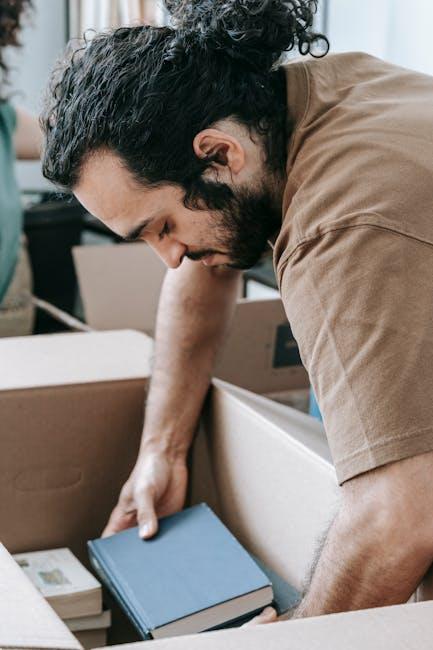
Strategic packing is all about maximizing every inch of your space while ensuring the safety and accessibility of your books. Start by categorizing your books by size and weight; heavier, larger volumes should form the base layer while lighter, smaller books can be stacked on top. Utilize the gaps between books by filling them with soft items like clothes or bubble wrap to prevent shifting during transit. Rolling book covers or protective sleeves also act as padding and help keep books snugly in place.
Consider designing a simple grid layout to visualize which books fit best together. Here’s a helpful guide to assist you in arranging your collection efficiently:
| Book Size | Packing Position | Protective Measure |
|---|---|---|
| Large | Bottom layer | Bubble wrap or kraft paper |
| Medium | Middle layer | Padded sleeves or old T-shirts |
| Small | Top corners/gaps | Plastic bags or cloth |
- Stack books spine down to reduce stress on the spine during movement.
- Label boxes clearly by category or size to minimize unpacking time.
- Fill empty spaces with lightweight materials to avoid shifting.
Labeling and Inventorying Your Book Boxes
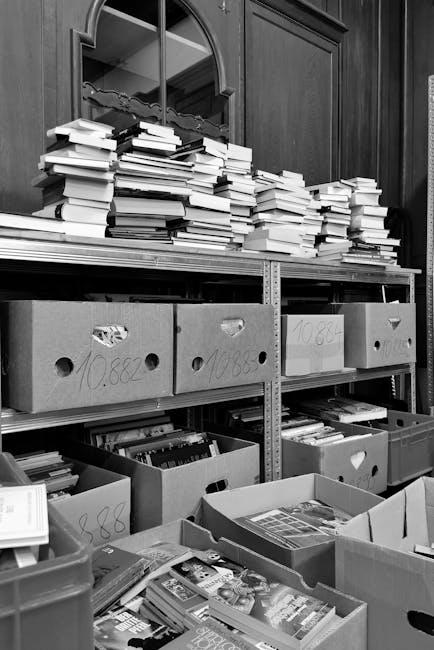
When preparing your book boxes for a move or storage, a clear and consistent labeling system is essential. Use sturdy labels or consider printable tags for a neat finish. Include details such as the genre, box number, and the destination room. This approach not only helps you identify the contents at a glance but also streamlines the unpacking process, reducing time spent searching for specific titles. For an added layer of organization, color-code labels based on categories like fiction, non-fiction, or reference materials.
Keeping an inventory list alongside your labels is equally important. Create a simple table to capture the contents of each box, which can serve as a quick reference throughout your move or while in storage. Below is an example template that you can customize to fit your collection:
| Box Number | Category | Key Titles | Destination Room |
|---|---|---|---|
| 001 | Fiction | “1984”, “The Great Gatsby” | Living Room |
| 002 | Non-Fiction | “Sapiens”, “Educated” | Home Office |
| 003 | Reference | Dictionaries, Encyclopedias | Library |
- Label all sides of the box for easy spotting regardless of stacking.
- Use waterproof markers or laminated labels to withstand moisture or smudges.
- Keep your inventory digitally or on paper, and update it as you pack to avoid confusion later.
Tips for Unpacking and Maintaining Book Condition After Moving
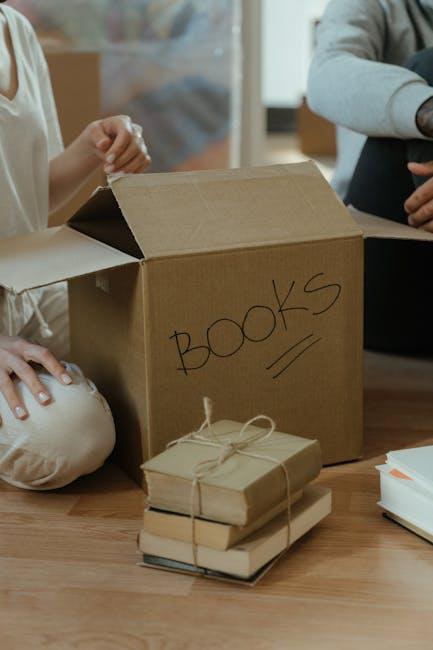
Upon arrival at your new home, it’s crucial to handle your books with care to preserve their condition. Begin by unpacking boxes in a clean, dry area with ample space to avoid damage. Remove books gently to prevent bent covers or torn pages. Place books upright on shelves or flat in piles, ensuring they aren’t stacked too high to avoid warping or crushing. Don’t forget to air out boxes before storing them away; this reduces moisture buildup which can cause mildew or mold.
Maintain book quality by paying attention to environmental factors. Below is a handy guide to help you keep your collection safe from common hazards:
| Potential Problem | Prevention Tips |
|---|---|
| Humidity | Use a dehumidifier or moisture-absorbing packs in rooms with high moisture levels. |
| Sunlight Exposure | Place bookshelves away from direct sunlight to prevent fading and brittle pages. |
| Dust Build-Up | Regularly dust books and shelves with a soft cloth to avoid dirt accumulation. |
| Pests | Keep food away from book areas and inspect books for tiny insects or larvae. |
Q&A
Q: What’s the best way to organize books before packing?
A: Start by sorting your books by size and weight. Group small paperbacks together and stack larger hardcovers separately. This helps maximize space and prevents damage by distributing weight evenly.
Q: How can I protect my books from damage during the move?
A: Wrap delicate or valuable books in bubble wrap or old newspapers. Place towels or clothing around the books inside the box for added cushioning. Avoid overpacking boxes to prevent crushing.
Q: What kind of boxes should I use for packing books?
A: Choose small to medium-sized boxes since books are heavy. Using sturdy boxes with reinforced bottoms prevents breakage and makes the boxes easier to carry. Avoid large boxes that become too heavy.
Q: How should books be placed inside the boxes?
A: Pack books flat or spine down to protect their bindings. For a neat stack, alternate the direction of books in each layer, which also helps balance the weight.
Q: Are there any special tips for packing rare or collectible books?
A: Absolutely! Wrap each rare book individually in acid-free tissue paper and place it in a rigid box with extra padding. Label the box as “Fragile” to ensure careful handling.
Q: Can I save space by removing dust jackets?
A: You can—removing dust jackets and packing them separately helps protect them from tears and scuffs while saving space. Just make sure to keep them with their corresponding books.
Q: What’s an efficient way to label boxes containing books?
A: Write detailed labels including “Books,” the room they belong to, and a brief description like “Cookbooks” or “Novels.” This speeds up unpacking and prevents unnecessary handling.
Q: How can I reduce the weight of book boxes without leaving books behind?
A: Use smaller boxes and pack fewer books per box to keep the weight manageable. Also, intersperse lighter items such as notepads or bookmarks between books to balance the load.
Q: Any creative hacks for packing books efficiently?
A: Use empty space inside your suitcases or bags for paperback collections. Also, consider packing books standing upright, like on a shelf, to better mimic their natural position and reduce stress on bindings.
Q: Is there a recommended packing order for books?
A: Pack the books you’re unlikely to read soon first, saving your current favorites for last so they’re easily accessible during the move. This way, the unpacking phase is more enjoyable!
Concluding Remarks
Packing books might seem like a simple task, but with a little strategy and care, it can transform from a chore into a seamless step in your moving or organizing process. Whether you’re a casual reader or a devoted bibliophile, these tips help ensure your treasured tomes arrive safely and ready to be enjoyed in their new space. So, gather your boxes, wrap those pages with intention, and embark confidently on your next chapter—because every book deserves a thoughtful journey.